Goal-Based Investment Planning Explained: How to Invest with Clear Financial Objectives
Goal-based investment planning is a structured financial strategy where investments are linked to specific life objectives rather than random wealth accumulation. Instead of investing without direction, this approach aligns financial decisions with goals such as retirement, children’s education, buying a home, or building long-term financial security. By defining clear financial objectives, investors can determine the appropriate investment horizon, risk tolerance, and asset allocation required to achieve each goal. This structured approach improves discipline, reduces emotional decision-making, and ensures that investments contribute directly to meaningful financial outcomes. When implemented effectively, goal-based investment planning provides clarity, measurable progress, and a reliable path toward long-term wealth creation.
What Is Goal-Based Investment Planning?
Goal-based investment planning focuses on achieving clearly defined financial objectives instead of simply chasing higher returns. Each investment is linked to a specific goal with a defined timeline, expected cost, and risk profile. For example, an investor may allocate funds differently for short-term goals such as travel or emergency savings compared with long-term goals like retirement planning. By assigning investments to specific objectives, investors can maintain discipline and avoid making emotional decisions during market fluctuations. This approach also improves portfolio organisation. Rather than viewing investments as a single pool of money, each portion of the portfolio serves a distinct purpose. As a result, investors can track progress more effectively and stay focused on achieving their financial goals.
Why Goal-Based Investing Is More Effective Than Traditional Investing
Traditional investing often focuses primarily on returns without clearly linking investments to life objectives. While returns remain important, this approach may lead to poor allocation, inconsistent contributions, or emotionally driven decisions during market volatility. Goal-based investing improves financial planning by focusing on outcomes rather than short-term market movements. Key advantages include:
• Clear direction for investment decisions
• Better alignment between risk and financial goals
• Improved discipline during market fluctuations
• Measurable progress toward major life objectives
• More efficient long-term wealth creation
By structuring investments around specific goals, investors gain greater control over their financial future and are less likely to make impulsive decisions driven by market noise.
Types of Financial Goals Investors Typically Plan For
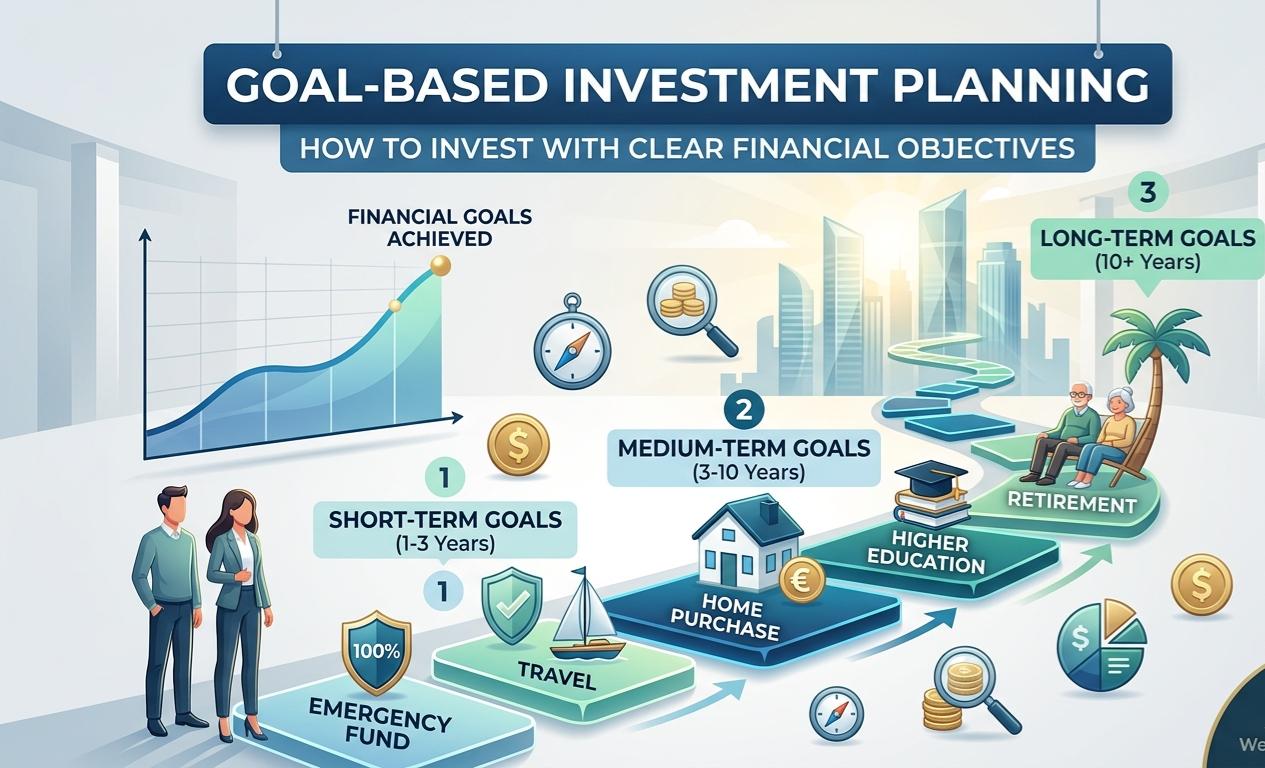
Financial goals usually fall into three main categories based on time horizon.
Short-term goals (1–3 years)
These include building an emergency fund, saving for travel, or planning a major purchase.
Medium-term goals (3–10 years)
Typical medium-term objectives may involve saving for a home purchase, planning for higher education costs, or building funds to start a business venture.
Long-term goals (10+ years)
Long-term objectives typically include retirement planning, children’s education, or long-term wealth accumulation.
Each category requires a different investment strategy. Short-term goals prioritise capital protection, while long-term goals can utilise growth-oriented investments such as equity mutual funds to maximise wealth creation over time.
Step 1: Identifying and Prioritising Financial Goals
The first step in goal-based investing is identifying and prioritising financial objectives. Investors should clearly define what they want to achieve and estimate the approximate timeline for each goal. Common questions to consider include:
• What major financial milestones do you want to achieve?
• When will you need the funds?
• How important is each goal relative to others? Goals can be categorised as essential goals (such as retirement or children’s education) or aspirational goals (such as luxury purchases or travel). Prioritising goals ensures that essential objectives receive sufficient financial allocation while maintaining a balanced investment strategy for other aspirations.
Step 2: Calculating the Future Cost of Your Goals
Estimating the future cost of financial goals is essential because inflation significantly increases expenses over time. For example, if a child’s education currently costs ₹20 lakh and education inflation averages around 8% annually, the cost after 15 years may exceed ₹60 lakh. Without accounting for inflation, investors risk accumulating insufficient funds to meet their goals. By estimating the future value of expenses, investors can determine the required investment corpus and plan their investment contributions accordingly. Accurate cost estimation helps prevent funding gaps and ensures that financial goals remain achievable.
Step 3: Choosing the Right Investment Strategy for Each Goal
Investment strategies should be tailored to the time horizon and risk tolerance associated with each goal. Short-term objectives usually require stable investments with lower volatility, while long-term goals can tolerate higher market fluctuations in exchange for better growth potential. A balanced goal-based portfolio may include a combination of:
• Equity mutual funds for long-term growth
• Debt instruments for stability
• Hybrid funds for balanced risk exposure
• Systematic Investment Plans (SIPs) for disciplined investing Diversifying investments across asset classes allows investors to balance risk while steadily working toward their financial objectives.
Step 4: Selecting Suitable Investment Instruments
After defining the strategy for each goal, investors must choose appropriate investment instruments to implement the plan. Common investment options include:
• Mutual funds
• Systematic Investment Plans (SIPs)
• Equity investments
• Fixed-income instruments such as bonds or fixed deposits
The choice of instruments should align with the goal’s time horizon, risk tolerance, and expected returns. For instance, long-term goals may benefit from equity-based investments that offer higher growth potential, while short-term goals typically prioritise capital preservation. Selecting the right mix of investment instruments improves portfolio diversification and increases the likelihood of achieving financial goals within the desired timeline.
Step 5: Monitoring and Adjusting Your Investment Plan
Goal-based investment planning is not a one-time process. Regular monitoring ensures that the investment strategy remains aligned with financial objectives and changing life circumstances. Investors should periodically review their portfolios to:
• track progress toward financial goals
• adjust asset allocation when necessary
• rebalance investments based on market conditions
• update financial plans when life events occur
For example, changes in income, family responsibilities, or market performance may require adjustments to the investment strategy. Consistent monitoring helps maintain alignment between investments and long-term financial objectives.
Common Mistakes Investors Make in Goal-Based Investing
Even with a structured strategy, investors may make mistakes that hinder their progress. Some common pitfalls include:
• Setting unrealistic financial goals
• Ignoring inflation while estimating future costs
• Failing to diversify investments
• Stopping investments during market downturns
• Not reviewing the portfolio regularly
Avoiding these mistakes is crucial for maintaining financial discipline and ensuring that investment strategies remain aligned with long-term objectives.
How Professional Financial Planning Improves Goal-Based Investing
While goal-based investing provides a strong framework, professional financial planning can significantly improve its effectiveness. Financial advisors help investors:
• create personalised investment strategies
• assess risk tolerance accurately
• optimise asset allocation across goals
• incorporate tax-efficient investment planning
• monitor and rebalance portfolios regularly Professional guidance ensures that investments remain aligned with changing financial circumstances and long-term objectives. Wealth Matrix provides structured financial planning solutions that help investors organise their investments around clearly defined goals. Through customised strategies and disciplined portfolio monitoring, investors can build a reliable path toward financial security and long-term wealth creation.
Conclusion: Investing with Purpose Leads to Better Financial Outcomes
Goal-based investment planning helps investors align their financial decisions with meaningful life objectives. Instead of investing without direction, this approach creates a structured path for achieving goals such as retirement, home ownership, education funding, and long-term wealth creation. By defining clear goals, estimating future costs, selecting appropriate investment strategies, and monitoring progress regularly, investors can build a disciplined and efficient financial plan. With the right strategy and consistent execution, goal-based investing transforms financial planning into a purposeful journey toward long-term financial stability and confidence.